What is Pentecost?
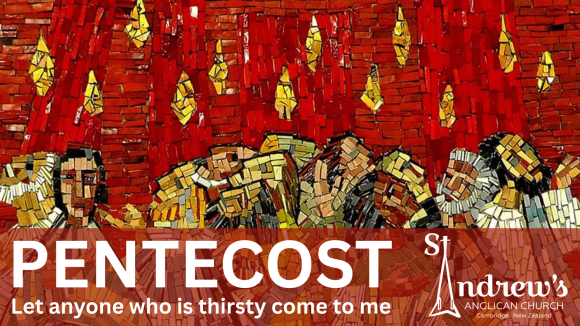
Pentecost is the New Testament name for the second of the annual harvest festivals, the “Feast of Weeks,” coming 50 days after Passover. It was a one-day festival celebrating the wheat harvest (Ex. 23:16; Lev. 23:15–21; Deut. 16:9–12). Like other celebrations in the Old Testament, the Feast of Weeks was associated with the renewal of the covenant made with Noah and then with Moses. In later Judaism, Pentecost was associated with the day when the law was given at Mount Sinai. In the Book of Acts and the moment of Pentecost the covenant promises of God are realised. Jesus said the Holy Spirit would empower the Apostles and this is what we see throughout Acts.
Jews from many countries gathered in Jerusalem for this festival: “Parthians, Medes, Elamites, people from Mesopotamia, Judea, Cappadocia, Pontus, the province of Asia, Phrygia, Pamphylia, Egypt, and the areas of Libya around Cyrene, visitors from Rome (both Jews and converts to Judaism), Cretans, and Arabs” (Acts 2.9-10). When the Holy Spirit arrived, all those gathered understood the Apostles’ message in their own language. This offers a spiritual and practical reversal of the breakdown in language described in Genesis 11. At that time people tried to build a tower (The Tower of Babel) to reach God. This is where we get the word “babble.”
At Pentecost we celebrate the beginning of the Christian Church through the inspirational arrival of the Holy Spirit. We recognise that the disciples who hid – terrified after Jesus’ death – were empowered by the Holy Spirit to do extraordinary things. Our church was born of miracles and wonders, of great sacrifice and extraordinary courage. May God grant us the same courage and may we find ourselves filled with the Spirit. Amen.